With COVID-19, online sales continue to grow. Having a website is therefore becoming essential for all businesses. To give you an idea of the impact that Covid-19 is having on online sales, here are some numbers from Statistics Canada:
In May 2020, online retail sales in Canada accounted for $3.9 billion, which represents an increase of 99.3% over February 2020 and 110.8% over May 2019.
The proportion of online sales for retail in April 2020 in Canada was 11.4% (vs. 3.8% in April 2019).
You haven’t yet had the opportunity to create your website to sell online? It’s not too late to make your digital transformation! If you are still hesitating, here are some arguments that might convince you ?:
You can easily expand your customer base: 91% of Canada’s population uses the Internet!
You will get to know your customers better: a website can store a lot of data about your clients, enabling you to better tailor your communications, offers and products/services.
You’ll be able to target your customers more easily: with digital marketing and all the tools available to you, it’s much easier to target your customers.
You will reassure your customers: a website, even a simple one, that describes your company and your products/services will strengthen your image and improve the confidence of your customers/prospects in you.
You will have a shop open 24 hours a day, 7 days a week! Enough to allow your shoppers who can’t make it to your store to shop, even at 4 a.m.!
Thinking about having an E commerce site for your business? Talk to us today.
The COVID-19 pandemic has driven consumers online, putting stress on ecommerce, email marketing and many other business systems.
But only 32% of firms have made the operational adjustments to meet such demands, according to findings announced on Wednesday by Experian.
In addition, beleaguered consumers are bracing for an anticipated second wave of COVID-19, the study notes.
The global research was conducted in June and July, and may not reflect current conditions, but it offers a snapshot of global pressures on businesses and individuals.
On the positive side, half of consumers say they will increase their online transactions over the next 12 months. And two-thirds will remain loyal to brands they liked prior to the pandemic.
This is also documented in a 20% boost in online transactions, including increases in these digital activities:
Grocery shopping — 41%
Applying for loans — 40%
Food delivery/takeout — 22%
On the downside, 65% worldwide believe their nation has not recovered economically from the pandemic.
Moreover, 30% of consumers have seen a decline in household income, with 43% in India saying so — the high among nations. And globally, the number of people who are having trouble paying their bills has doubled.
For their part, 53% of businesses say their processes have mostly or completely recovered from pandemic stress, with the United States most confident at 80%. Germany is the least confident, with only 27% saying they are upbeat.
However, 20% of firms lack confidence about their credit risk and collection decisions in the advent of COVID-19.
Moving forward, 60% of businesses plan to invest more in analytics and credit risk management. The UK, U.S., Australia, and Spain have already seen increases in AI and advanced analytics.
And the are seeking data — 51% are asking consumers for more information, and 49% are looking for new or alternative data sources.
Brands will have to integrate those data flows into triggered emails that reflect the behavior and interests of shoppers. And here’s a clue to how to proceed: 41% of customers would give more business to firms that treated them fairly during the pandemic.
COVID-19 has brought businesses and consumers together “in ways we’ve never seen before” states Steve Wagner, global managing director of decision analytics for Experian. And this trend that will most likely as economies recover, Wagner adds.
But Wagner warns that this requires sustainable business operations, including “safe, accessible and convenient digital experiences.”
Experian interviewed 3,000 consumers and 900 businesses in 10 countries, including Australia, Brazil, France, Germany, India, Japan, Singapore, Spain, the U.S., and the U.K.
A recent joint study by Google and National Association of Realtor, will help you to understand Realtor’s market, which is the home shoppers and home buyers.
As a real estate agent, you have to know what your potential clients are doing for home searching? what sources and tools they usually use? when they will want to contact you? and so on.
Home Shoppers Who Search Online
We know that most home shoppers (from the study it shows that about 90% of them) do their home search online and offline. But do you know that home shoppers using search engines are MORE likely to take an action on agent website than those who do not use search engines?
So study found that: for those who use the internet to search, 89% of them hire real estate agent vs. 71% of those who don’t use internet to search; similar situation for other traditional offline marketing channels, those who use internet to search home are more likely to use multiple marketing channels. Take open house as an example, 46% internet home shoppers will go to open house vs only 29% of non internet home shoppers. That is an obvious difference.
What home shoppers usually do when they arrive at Realtor’s website
Study found that:
– 51% of the time, they read general home information
– 48%, get directions to visit a home
– 44%, compare prices
– 35%, compare features
– 35%, search a listing company’s inventory
– 28%, call an agent
– 21%, locate a listing agent
– 21%, read reviews
– 20%, research mortgage financing
– 18%, contact an agent other than by calling
– 16%, watch an online video about a home
– 3%, other
So when home shoppers call an agent (28%), or contact an agent other than by calling (18%), they become qualified leads for Realtors.
Home Mobile Search
You may ask where do home shoppers use their mobile devices to do the home search. Study found that it could be anywhere. It happens any moment on the go. At home 77%, which is the most popular location for the search, one-thirds of home search happens at work, 28% waiting in line, 27% at restaurant, and 26% at other people’s house (I guess it could happen when they are at some open house, and do some search for more nearby open houses)
Another interesting factor the study found is that people are using multiple screens to search at the same time. So they could watch big TV screen, and at the same time do some quick search on mobile phone and tablets. So you will make sure that your website will look good on both big and small screen.
YouTube and Video Marketing for Realtor
Do you know that most web traffics go to video sites like YouTube? People would like to spend way more time watching videos than reading text, isn’t it obvious! Now this study found the same thing: video satisfies multiple research needs for home shoppers. They would like to know more about a specific community, like schools, parks, pool, library, and shopping area. They would like to have a virtual tour of a home for sale. They would like to compare features, agents, prices etc.
Imagine, if you could have series of videos to address their search needs, they would stay on your video channel watching one video after another, till they totally convinced that you are the right agent they want to work with. And you haven’t even spend a minute with them yet, face to face. Sure you spend a few hours shooting and preparing for those videos. But once videos are published to internet, they are there to work for you to attract qualified leads 24/7, don’t you think its way smarter doing such marketing.
Challenges for Realtors
Now you might wonder “I have uploaded videos to YouTube” “I have put videos on my site” “I tried to cover as many topics as I could in the video”, but why didn’t I get lots of phone calls from buyers or sellers.
You have to understand that home shoppers will perform an average of 11 searches before taking action on a real estate site. “Taking action” could involve one or few things they do, some happens on the site, for example, they may register your email newsletter, they may fill out a contact form, or locate where you or your agency are, or join your social network on Facebook, Twitter, Linkedin, etc.; some don’t happen on your site, for example, they may email to contact you, or make a phone call, those actions you probably have noticed already.
And you also have to understand that typical home buyers take 3 months to buy, but they usually engage with agents earlier in the home search process, usually in 3 weeks after they begin home search. They could engage with you in many different ways, make phone calls, write emails are traditional ways, they could also add you to their social networking sites.
New Home Shoppes Contact Agent Earlier
While new home shoppers (which I believe are usually the first time buyer), they are more likely contacting agent way earlier. Study found that 24% of new home shoppers contacted agent the same day they started searching. The reason behind could be that new home shoppers are undecided and tend to look for earlier professional advice.
But keep in mind that No matter whether it’s new home shoppers or regular home buyers, when they make their first contact with agent, they are usually in the first one-thirds of home searching phrase.
So It is kinda challenge for you, if you are their first contacted agent, to keep those leads hot during their whole search term till they become your clients. And it could mean big opportunities for any other agents who can get those ready-to-buy leads when they finally decided to buy.
How Traditional Offline Marketing Help
Study found that agents remain central to offline search. Though other traditional offline channels trail in importance.
Study found that 88% of home buyers use an agent and 67% of them use agent frequently. Agents role is very important because it bridge the gap between internet research and viewing/buying a home in real world. In the contrast, TV, billboards, and print channels play minimal role in research and decision making process for most home shoppers nowadays.
You, as a Realtor should use Internet real estate marketing and spend more time incorporating online and mobile in order to complement your efforts in offline marketing and sales channels.
Video marketing is playing an important role in leads capture and maintain process.
Agent website is the first opportunity to present your professionalism before you could get another chance to present to the prospects face to face.
You should Lower your advertising budget on TV or print media. And Focus on enhancing your visibility online everyday from now on!
Our company has more than 5 years experience in custom web design for real estate agents, very professional branding with affordable price, best of all, we design multi-language site for multi language speaking agents. Our website design also give your website high flexibility to show on any big or small screen. We do video marketing for agents, we do ranking tracking for agent website. Our monthly marketing plan starts as low as $250.
If you want a professional and successful presence online, contact us, we are the right expert to work with.
It is obvious that today’s buyers must search online before buying most things online or in the local store. When it comes to home shopping, do home buyers reply on online search before making their decision?
Recent survey conducted by Google and NAR collaborated to uncover trends and insights around digital media usage among home shoppers, whether they were looking for an existing home, a newly constructed home, or an apartment.
The results are interesting but not surprising. Here are some of the highlights of the survey report:
– 90 percent of home buyers searched online during their home buying process
– Real estate related searches on Google.com grew 253 percent over the past four years.
– Buyers use specific online tools during different phases of the home search process
– How important “local” search terms and websites are for buyers
– How mobile technology cements online to offline home buying — including the reading of online reviews
– How video and YouTube satisfy buyers’ research needs
– The role of age and gender in driving real estate decision making in the market by being the top demographics who searched online and took the next steps offline
– Top states for searches around first-time home buyer tips and specific housing segments like senior housing and foreclosures
– Shoppers will perform an average of 11 searches prior to taking action on a real estate site.
– 69 percent of home shoppers who take action on a real estate brand website begin their research with a local term (eg. Vancouver homes for sale) on a search engine.
– Mobile applications are used by 68 percent of new home shoppers at the onset and throughout their research.
– Where do new home shoppers use their mobile devices? Here’s the breakdown: 77 percent at home, 31 percent at work, 28 percent when waiting in line, 27 percent at restaurant and 26 percent at other peoples’ homes.
– YouTube is the top video research destination for home shoppers.
– 78 percent of new home shoppers visit three or more sites prior to taking action on a real estate site.
– 31 percent of home shoppers who take action on a real estate site are aged 25 to 34.
– 52 percent of first time buyers started their search online.
– 77 percent of first time buyers drove by a home viewed online.
Marketing is a dynamic field which undergoes constant changes and innovations. There are a number of marketing strategies that you can apply to reach your product to your target customers. But the newest development in this field is local mobile marketing. This is a process in which you can take the help of the local marketing service providers.
Based on their assistance, what you can do is to make your presence felt by the customers in their mobile phones. This is all about local mobile marketing strategies in general. But these strategies may not be applicable to your business. So, you need local mobile marketing campaigns to cater to the requirements of your specific business.
Before you start applying certain strategies you must understand the importance of the local mobile marketing.
Instant marketing
The traditional tools of marketing have become outdated just because they can not be in touch with the target customers day in and day out. They may come out with new offers and schemes but the customers are not aware of them. It is not always possible for all to stick glued to the television to catch the latest development of every product that they are using.
So, it is the responsibility of the company to make the customers know about all the recent developments of their products and services. There is no better way than local mobile marketing.
Life span
Mobile marketing service is more effective than any other marketing because the life span is longer. If you send a message to your customer, it will be there in the inbox, whereas the other tools of marketing are ephemeral and short lived. But the customer can always take a look on the message whenever he wants later on. So, the life span and effect of local mobile marketing is far reaching.
Existing and new customers
This marketing tool helps to maintain the existing customers. At the same time, it is easier to gain new customers as well. The service will send message to the existing customers. It will also set some target of the new customers as well.
Small and medium scale businesses thrive on local mobile marketing primarily. There are a number of local marketing services that will claim make your product popular. But you have to consider a few things before you take recourse to a local mobile marketing service.
Who are your target customers? Before deciding your marketing strategy, you must identify your target customers.
Identify their mobile using habits.
It is important to know when they are using their mobiles and to what extent, whether they delete the messages or take a look again when free.
Local mobile marketing service is not only about messages. There are interactive voice calls, picture messages and so on. Whatever it may be, the main aim is to extend the reach of a company. Marketing strategies can not be predefined and static. It has to evolve itself according to the requirements. Local mobile marketing strategies too can change itself from time to time according to the need of the business.
这就是三圈刺猬原理,three circles of hedgehog principle。这三个圈有各自含义:
第一,What are you deeply passionate about? 什么让你产生深深的激情?
第二,What can you be the best in the world at? 在那方面你能成为世界上最好的吗?
第三,What drives your economic engine? 什么能驱动你的经纪引擎?
有许多资源你可以利用来搜集信息,帮助创作content,比如当地报纸,电视新闻和广告,广播新闻和广告,当地本行业论坛,社交网站,做问卷调查。还有Google有很好的资源可以利用,比如Google Alert, Google Reader, Google Analytics,最好的是Google搜索引擎。
A survey conducted by Frank N. Magid Associates in April 2011 found that between 9am and 5pm, more consumers surveyed reported using Facebook than watching TV. This was true for each age group broken out from ages 15 to 46. Baby boomers were the only exception. Those surveyed preferred TV over Facebook at all hours. But that doesn’t mean they don’t Facebook. Survey found around 26% of those surveyed used the social network between 9am and 5pm.
So it tells marketers that working hours (9am-5pm) most probably is the best time frame to launch social media marketing campaigns especially you prefer Facebook ads campaign.
But it didn’t say that after working hours aren’t good marketing time at all. Because according to the survey, around 40% of those surveyed say they continue to use Facebook into the evening hours. Survey also found that 41% of those mom surveyed used the social network between 5pm and 8pm during dinner make time.
So it depends on what audience group Facebook ads are targeting and what product/service to promote. However most likely you want to run massive Facebook ads campaigns during working hours, if you want to reach more audiences as possible. But we still suggest to run Facebook ads campaigns during dinner time (5pm-8pm) if you want to target those moms and dads. Because who knows, the conversion rate during dinner time might be higher than during working hours.
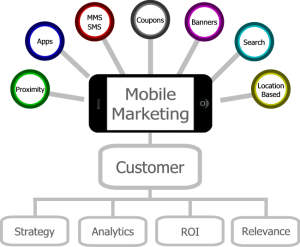 Marketing is a dynamic field which undergoes constant changes and innovations. There are a number of marketing strategies that you can apply to reach your product to your target customers. But the newest development in this field is
  This marketing tool helps to maintain the existing customers. At the same time, it is easier to gain new customers as well. The service will send message to the existing customers. It will also set some target of the new customers as well.